

How to Keep Inflatables from Falling Over
Inflatable decorations and displays are fantastic. Until they’re not. We’ve all seen it: a giant bounce house tilting sideways in a breeze, an advertising display that’s decided to take a nap on the pavement, an inflatable arch for wedding that doesn’t quite say “forever”.
But a falling inflatable is more than just an eyesore. It can be a real hazard. It can scare people, damage cars or property, and even hurt children. And it can make even the most well-organized event look unprofessional.
The process of how to keep custom inflatables from falling over is not complicated. But it does require consistent attention to a few key areas. The main threats are wind, insecure anchoring and an unstable base. By focusing on preparation, using the correct equipment and performing regular checks, you can manage these risks easily.
Know Your Inflatable: Size, Shape & Wind Limits Matter
The first step is to know as much as you can about the specific item you are using. Not all inflatables are the same. Size, shape and material change how they react to conditions.
The most important information comes from the manufacturer. Before setup, find the manual or product specifications. Look for the official wind speed rating. This number tells you the maximum wind your inflatable can safely withstand. For many common models, this limit is between 15 and 25 miles per hour. Operating in wind stronger than this rating is dangerous, no matter how well the unit is anchored.
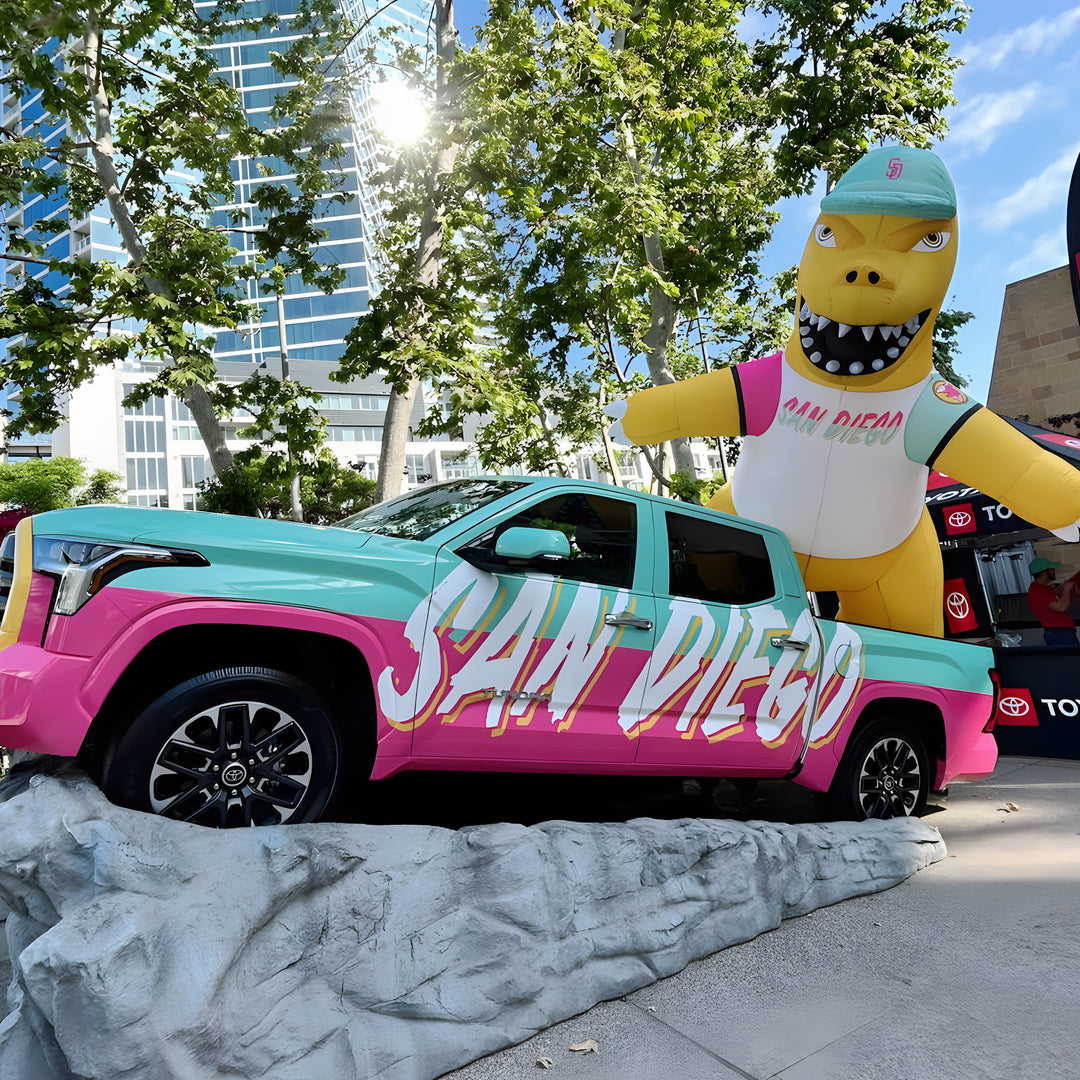
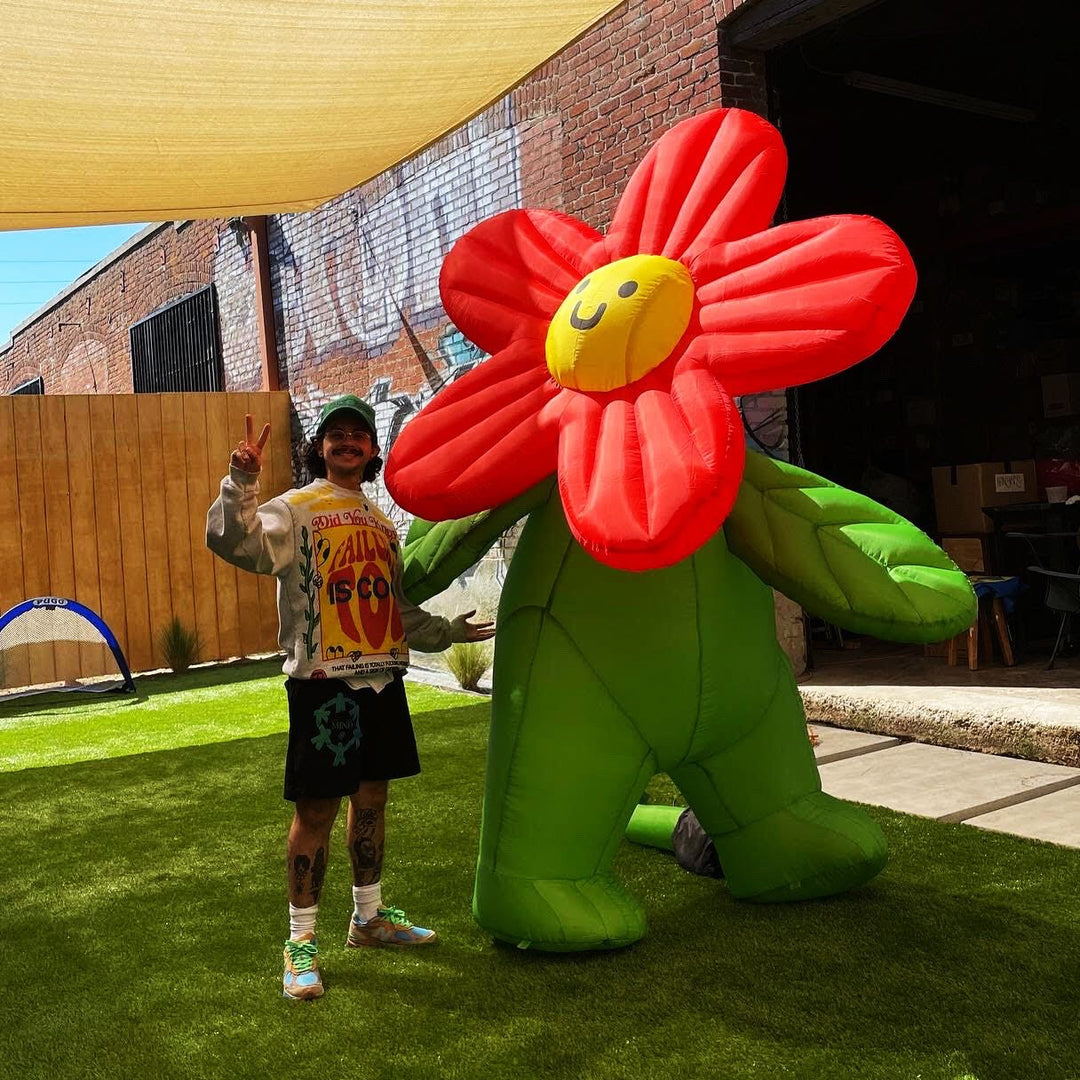
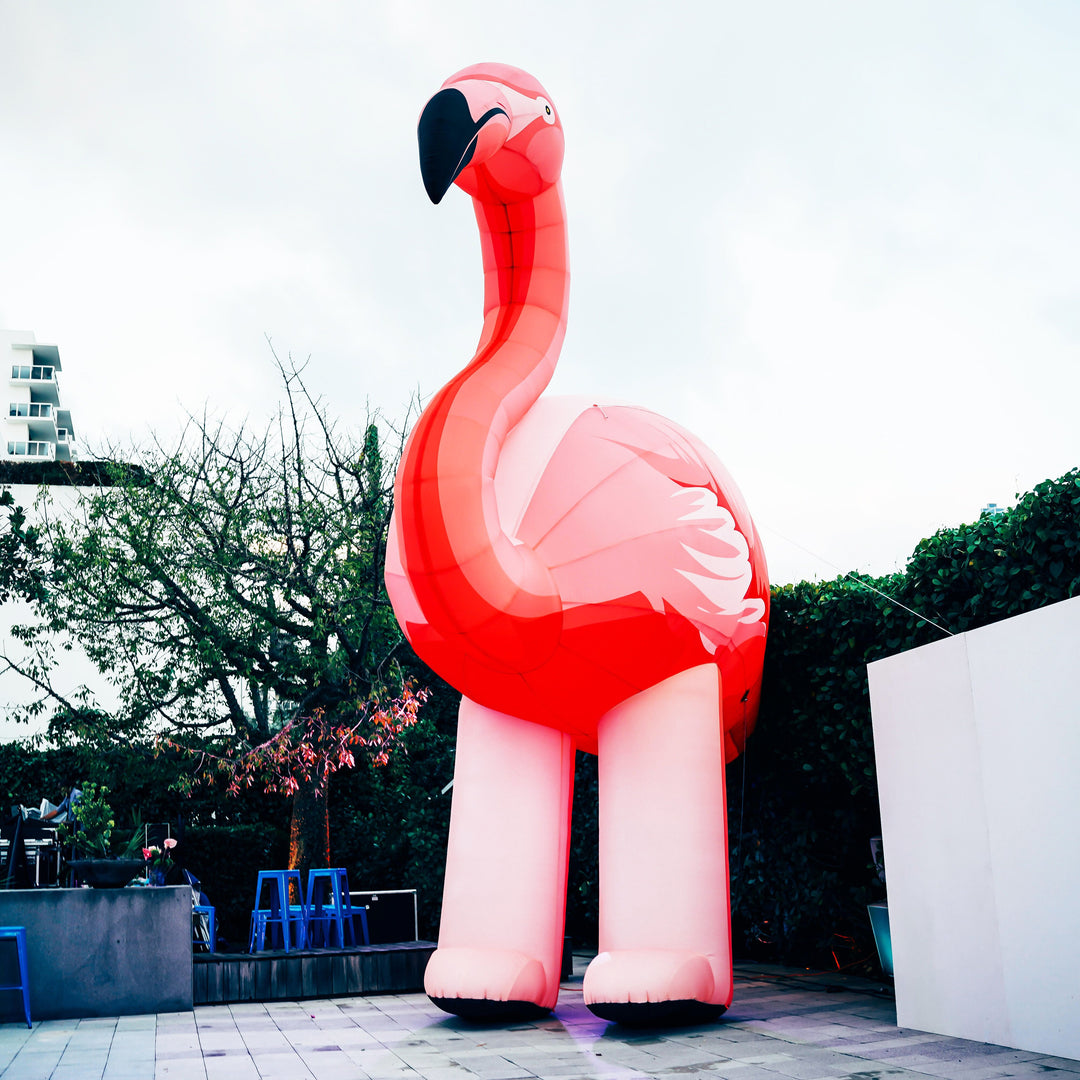
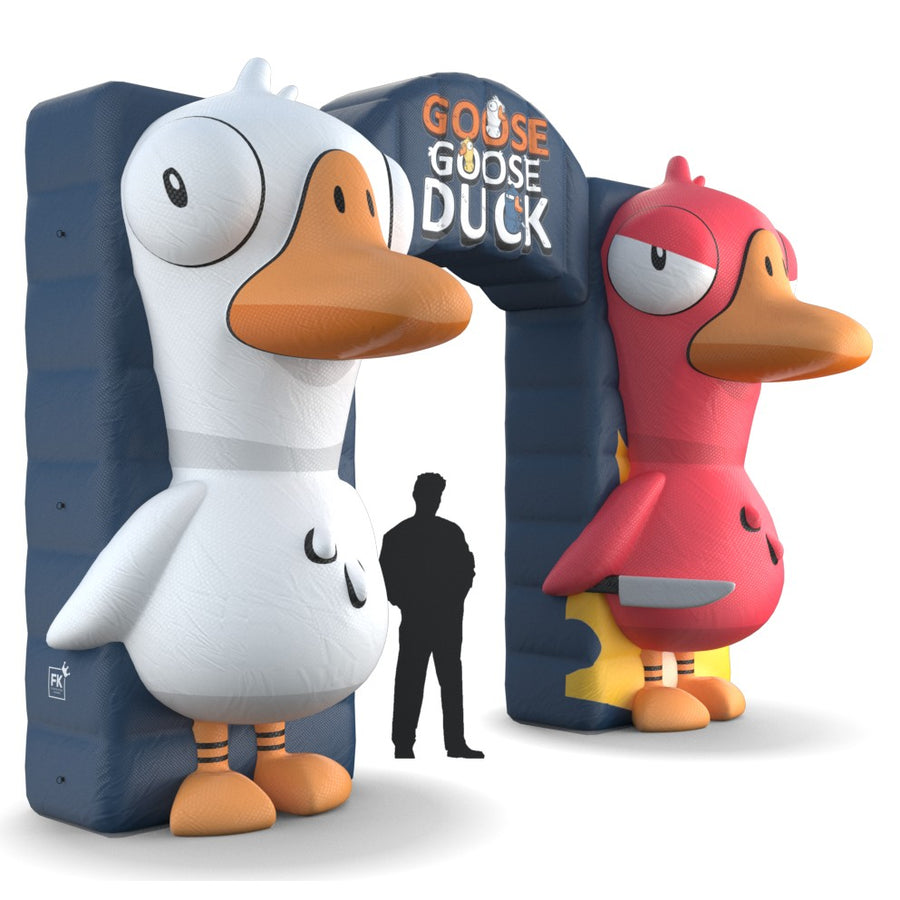
Wind force increases dramatically with the size of the inflatable. A small, low-to-the-ground figure has less risk. A large, tall inflatable, like a 20-foot custom inflatable character or inflatable tunnel, acts like a sail. It has a big surface area for the wind to push against. This creates lift and can make the entire structure want to tip or even fly away. Always be more cautious with larger items.
Always monitor the weather forecast . And also watch the conditions on site. If flags are snapping straight out or if dust and leaves are blowing consistently, the wind is likely too high. The safest choice is to deflate the unit until the wind calms down.
Master The Anchoring Techniques
Anchoring is the physical process that holds the inflatable to the ground. This is the most important part of learning how to keep inflatables from falling over.
Every inflatable is built with anchor points. These are the durable loops or straps located around its base. They are not optional. You must use every single one. These points work together as a complete system to spread out the forces from the wind. If you only use half of them, the stress concentrates on those few points, which can cause tears or a sudden failure.
The type of anchor you need depends completely on the surface where the inflatable is placed.
Soft surfaces like grass, dirt or sand
For these surfaces, ground stakes are the proper tool. The thin, short stakes included with some kits are often insufficient. It is worth investing in stronger, longer stakes. Industry guidelines say you should use metal stakes that are at least 15 inches long or 380 millimeters. These should have a thick, solid design, not a thin wire shape.
To install them, push the stake through the metal ring or loop on the inflatable’s rope or strap. Then, drive the stake into the ground at a 45-degree angle, pointing away from the inflatable. Use a hammer or mallet to drive it in until the top is nearly flush with the soil.
After all stakes are in, walk around and pull hard on each rope. A properly set stake will not budge. If one pulls loose, it needs to be driven in deeper or at a better angle. Always check that the ropes themselves are in good condition. Look for fraying, cuts, or severe wear. A damaged rope can snap under pressure.
Hard surfaces like concrete, asphalt, brick, wooden decks and indoor floors
For hard surfaces, stakes cannot be used.
The inflatable is held down by heavy objects that are attached to its anchor points. Common ballast includes plastic barrels filled with water, sandbags, or concrete blocks. The key is that the weight must be heavy enough. Two small sandbags on a large inflatable will not work. A good rule is that each anchor point should be held by a weight of at least 40 pounds. For very large commercial inflatables, weights of 100 pounds per point are common. The weights must also be secured properly.
Simply placing a concrete block on a strap is not safe. The strap can slip off. Instead, tie the strap or rope securely around the weight. For water barrels, use the integrated handles or a strap that wraps around the barrel’s middle. The weights should be placed directly next to the inflatable’s base, not several feet away. This keeps the force directed downward.
A third anchoring method is to tie the inflatable to a fixed, permanent structure. This is an excellent option when available. Strong points include structural beams on a building, heavy fence posts, or mature trees . Use heavy-duty ratchet straps or commercial tie-downs, not simple rope. Wrap the strap around the solid object and connect it securely to the inflatable’s anchor point. This creates a very strong connection, often stronger than stakes or weights alone. Ensure the structure you are tying to is truly solid and can handle the pull.
Always Inspect Before Use
Good anchoring starts with a good setup. The process begins before the inflatable is even fully inflated. First, clear the area. Remove any sharp sticks, rocks, or debris from the ground. The site should be as level as possible. An inflatable placed on a steep slope will naturally want to slide and put uneven stress on its anchors.
Once the area is clear, lay out the inflatable and connect the blower. As it fills, watch its shape. It should become firm and take on its proper form evenly. Do not stop inflating too early. An under-inflated unit will be limp and can fold over in the wind. Also, avoid over-inflation, which can stress the seams . The material should be taut but not drum-tight. Listen to the blower motor. It should run with a steady constant hum. If it sounds strained or keeps shutting off, there might be a leak or a blockage in the air tube. Check that the tube is pushed firmly onto the blower and onto the inflatable’s inlet.
After the inflatable is fully up and anchored, do a complete inspection. Walk the entire perimeter. Look closely at the material, especially along the seams and around the anchor points. Search for any small rips, holes or separated stitching. Feel the anchor loops and straps for tears or weak spots. These areas are under the most strain and need to be strong.
Finally, do a visual stability check. Stand back and look at the inflatable from all sides. Does it look symmetrical and balanced? Is it leaning to one side? A lean often means one side is under-inflated. Or that the anchors on the opposite side are pulling too tightly. Check that the anchor ropes have a similar amount of tension. They should be snug, but not so tight that they are pulling the inflatable out of shape.
This inspection is not a one-time task. The process of how to keep inflatables from falling over includes ongoing checks. If the unit will be up for more than a few hours, plan to inspect it at least twice a day. Look at the anchors again, especially after periods of strong wind. Re-tighten straps if they have loosened. Make sure ballast weights have not shifted. Listen for changes in the blower’s sound.
By following these steps, knowing the wind limits, choosing the right anchors for the surface, and performing careful setup and inspection, inflatable stability is very achievable. The effort prevents damage, protects people, and ensures your inflatable serves its purpose as a safe and impressive display.
Discover Unique Custom Inflatable Designs for Every Event

Inflatable Tents

Inflatable Advertising Balloons

Inflatable Advertising Blimp

Custom Bounce House

Inflatable Tunnel

Inflatable Arch
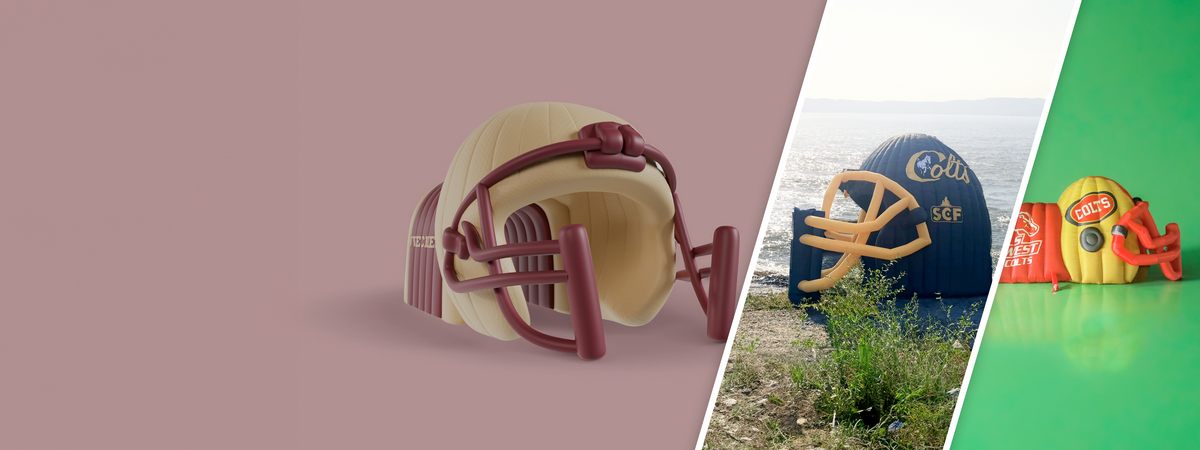
Inflatable Football Helmets